
BIG BROTHERS
08/07/2013 11:19
BIG BROTHERS
Where is the Muslim Brotherhood leading Egypt?
LETTER FROM CAIRO about the Muslim Brotherhood and the direction in which it might be leading Egypt. During the past year, the Muslim Brotherhood has been able to win elections without confronting a central weakness: the immense distrust that it inspires among many powerful elements of Egyptian society. Such sentiments run particularly deep in the police and the Army, which have a long history of animosity toward the Brotherhood. The organization was founded by Hassan al-Banna, a devout schoolteacher, and it was dedicated to creating a more Islamic society that would topple Egypt’s colonial overlords and spark a religious renaissance across the Middle East. In the nineteen-forties, the Brotherhood sponsored a military battalion, which fought Jewish settlers in Palestine. Members also carried out a series of attacks against Egyptian officials who were complicit in British rule, including the assassination of the Prime Minister, in 1948. This act and other bombings were repudiated by al-Banna, who said of the terrorists, “They are neither Brothers, nor are they Muslims.” The Brotherhood eventually abandoned its military activities and adopted a policy of nonviolence in Egypt. But the organization never shook the stigma of those early acts, and it was banned in 1954, which resulted in a culture of secrecy.
A pattern emerged of former Brotherhood members becoming terrorists. Each of the country’s military rulers, from Gamal Abdel Nasser to Sadat to Mubarak, responded to the Brotherhood with treatment that seemed to vacillate between two polar viewpoints: at times, the Brothers were imprisoned and tortured; at other times, they were allowed to participate in some limited form of politics, as a kind of pressure valve. Over time, this schizophrenic strategy helped create an organization that was traumatized and isolated, but more experienced in politics than any other group that survived the revolution. They knew how to run election campaigns, and years of effective charity work had taught them how to organize at the grassroots level. By the time Mohamed Morsi, who was for a long time a leading figure in the Brotherhood, ran for President, the popularity of the Brotherhood had started to decline. Morsi’s victory left the Brotherhood in a precarious position.
It controlled the Presidency and the assembly that was charged with drafting Egypt’s new constitution, but it had few supporters in the judicial system and most ministries. The organization remained illegal—to this day, the Muslim Brotherhood has not been registered in Egypt. There is no official presence in the police or the military. In both these institutions, any officer or enlisted man who is discovered to be a member of the Brotherhood will be dismissed. Discusses the Brotherhood’s relationship with the police and military. Describes incidents in which mobs have destroyed offices belonging to the Brotherhood, including its national headquarters.
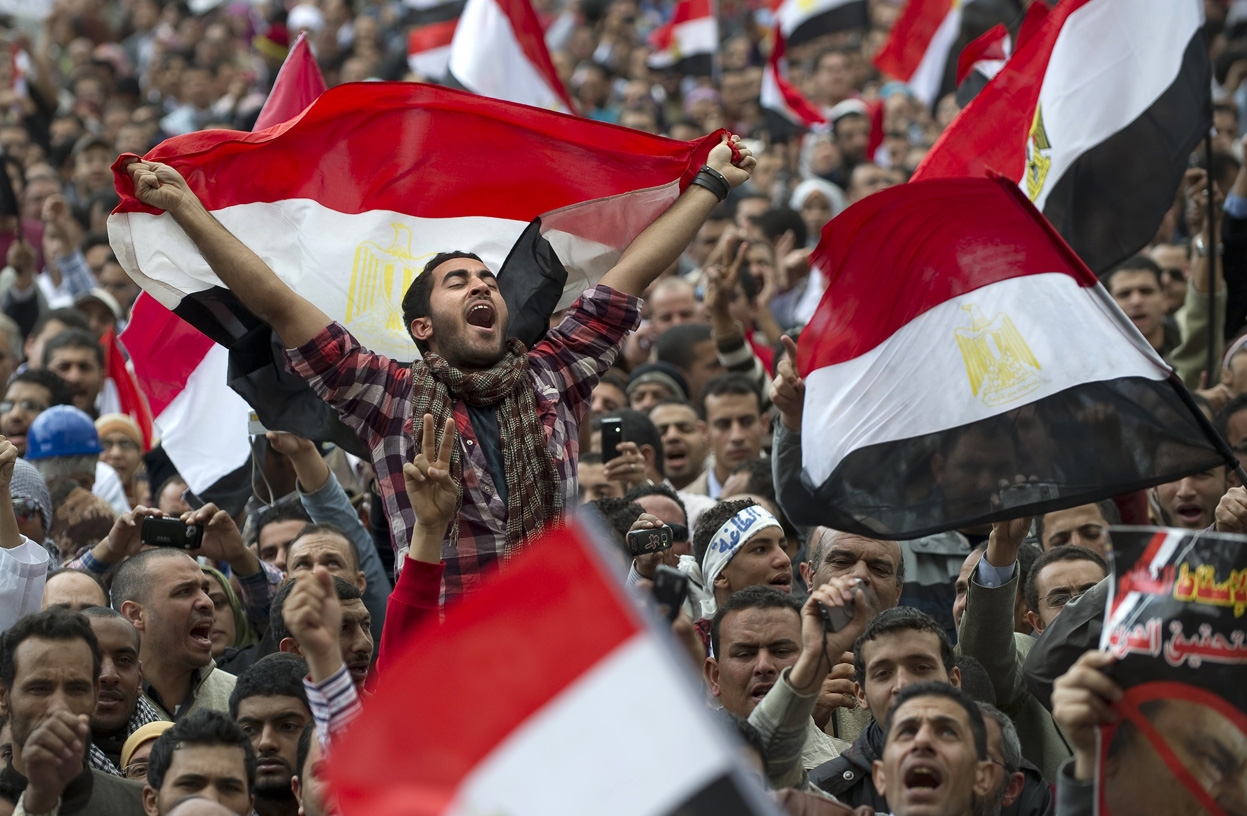
Describes the role the Brotherhood played in the drafting of the Egyptian constitution, and the objections some observers and participants have to the document that resulted; describes the various levels of support for the Brotherhood among rural and urban voters, as well as the American government’s recent attitudes toward the group. Writer observes a protest outside of the Egyptian presidential palace, and describes the way in which those protests have evolved since the beginning of the revolution. Since 2011, the participants have become so experienced that the revolution is essentially portable. It’s like a kit: all the pieces can be packed up and reassembled anywhere in the city at a moment’s notice. Young activist groups always appear with their flags, and another mainstay is the Ultras, hard-core soccer fans who beat drums and sing songs. Invariably, a poet shows up to declaim angry verses. Writer describes several conversations between protesters and soldiers, including one exchange between a revolutionary in his early twenties and a soldier sitting in the cockpit of a tank, with the hatch open.